
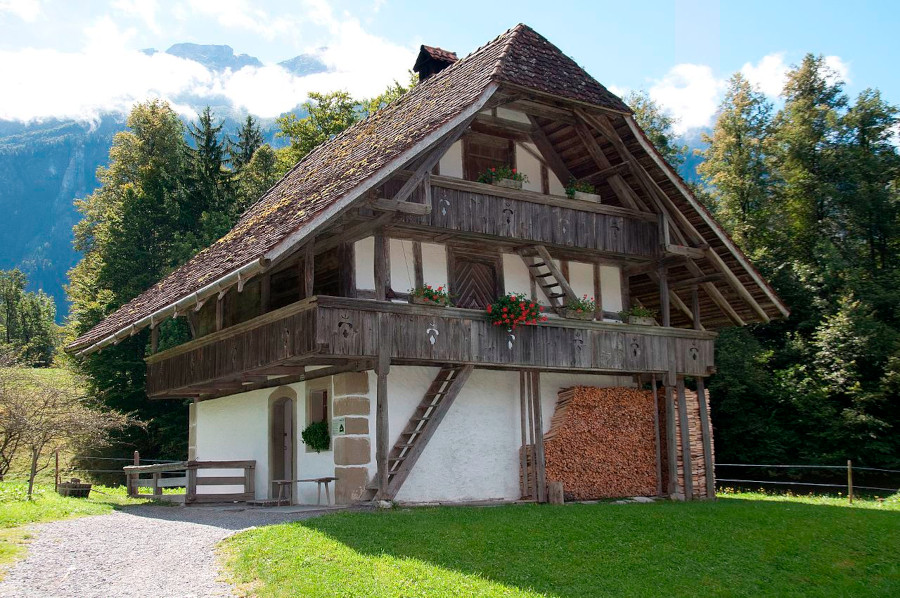
Many varied architecture styles
Despite its small size (41,000 km2/15,444 sq mi), Switzerland shows some distinct differences in domestic architecture. What is considered around the world as the Swiss chalet style represents only one of a number of traditional designs for rural buildings in Switzerland.
Traditional Swiss farm and village house design depended on a number of factors - local climate, type of agriculture, building materials available, local traditions and location.
Migrations of people from one area to another also brought a mixing of different traditional styles.
Each region in Switzerland consequently developed their own style of vernacular architecture to meet these factors.
Wood was used for timber constructions, post-and-beam constructions and half-timbering. Solid buildings were constructed using quarry stones, pebbles from rivers, cut stone and bricks. Wood was then used for ceiling beams, floorboards and panelling. Limestones were fired and used as masonry mortar and plaster.
Different roof coverings influenced the form and shape of the historical buildings. Large, steeply-pitched thatched roofs ensured that water can quickly run off, which allows the thatch to dry.
Flat-pitched shingle roofs made it possible to cover the roof with wooden shingles without using nails, only weighing them down with stones.
The slate or tiled roofs are non-combustible and longer-lasting so became more common especially from the 19thcentury onwards when building insurance regulations came into force.
Main Building Materials

- 1. Stone (with or without plaster)
- 2. Stone + Wood (Kitchen of stone; living rooms of wood)
- 2a. Stone + Wood house (living rooms also with stone)
- 2b. Stone + Wood house (parts of house eg. stables, of wood)
- 3. Wood (planks horizontal)
- 4. Wood (structure supported by vertical wooden beams)
- 5. Half-timbered construction
Regional styles
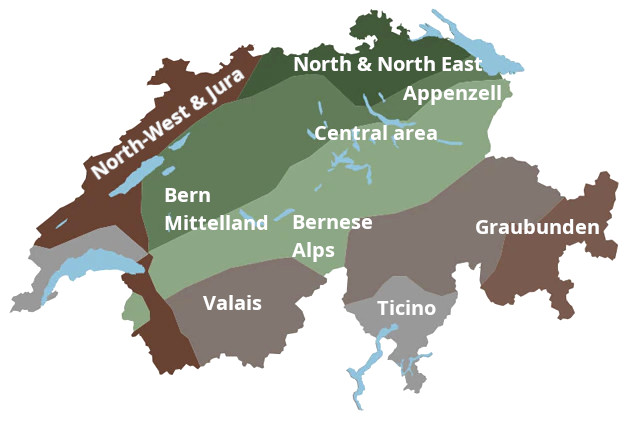
Traditional architecture in
Central Switzerland
Characteristics
- Steep roof and separate weatherboards sheltering the row of windows on each storey.
- Wooden structure on a masonry foundation.
- Ground floor high above the ground.
- An outdoor staircase on the side of the building leads to the front entrance.
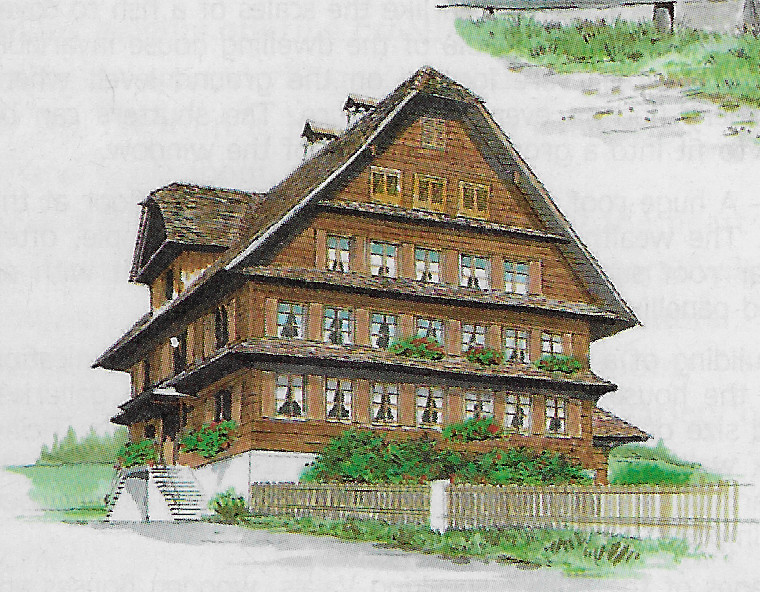

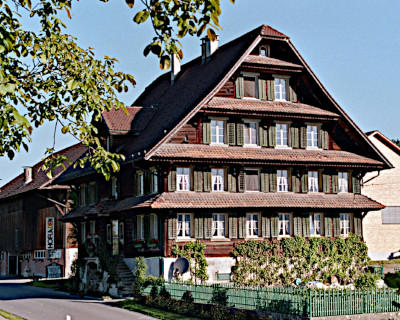
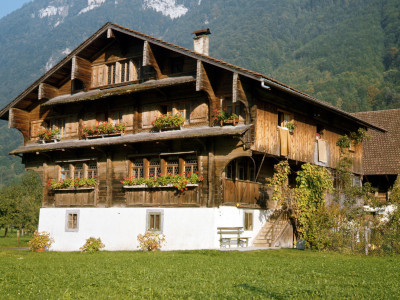
Log construction predominates in Central Alps and Alpine foothills. Straight-growing conifers make excellent building material. The timber lasts a long time with careful selection and maintenance.
The oldest of the log houses are found in the Schwyz/Steinen area and were built in the 12th Century.
In rainy areas thatched roofs were common until 19th century when compulsory building insurance was introduced in 1813 which led to disappearance of thatched roofs from the rural landscape.
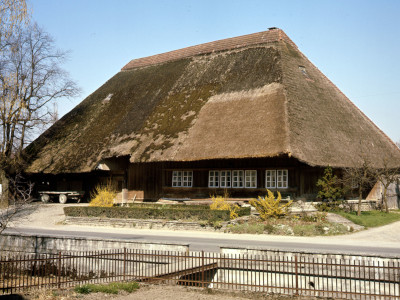
Restoration of thatched roof (former) farmhouse in Hüttikon - now the village museum. Photos of before and after.


Traditional architecture of the
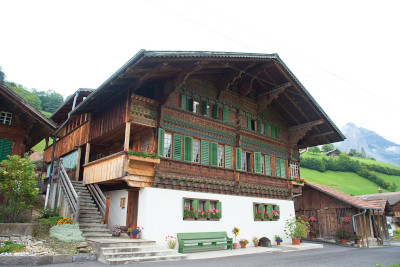
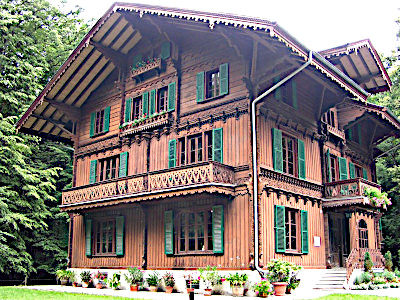
Bernese Alps
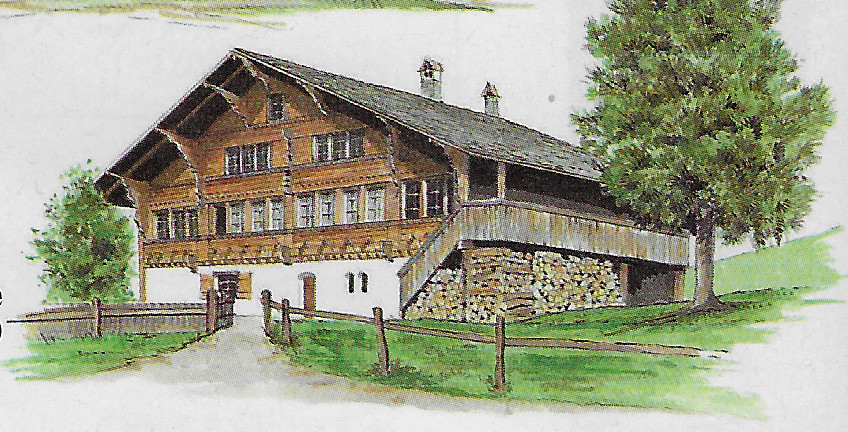
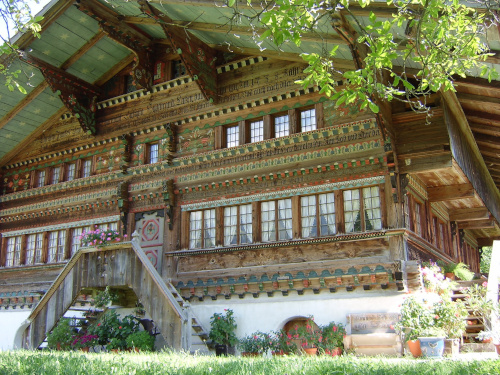
The "cuckoo clock" style that made the Swiss chalet popular all over the world
Characteristics
- Block structure with heavy square beams.
- Gable ends often have windows and are protected by large eaves.
- Low-pitched roof with wide eaves on all sides, often weighted down with large stones in the high valleys.
- Richly decorated, profuse ornamentation; beams are carved with facets; roof props elaborately finished.
- Design basically unchanged since 12th Century!

Traditional architecture of
the North West & Jura
Characteristics
- Due to limited timber of building quality, most houses built of stone, or wood with a stone foundation.
- Buildings developed into multi-story and multi-purpose - animals & fodder, grain storage and living quarters all under 1 roof.
- Buildings had small windows to protect from winter wind and snow.
- Water is a scare commodity so rainwater and snowmelt are fed from the roof into a cistern.
- Roofs of shingle or thatch until introduction of fire insurance in 19th Century.

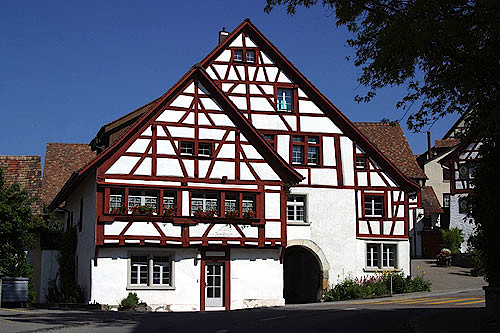
Traditional architecture in
the North and North East
Characteristics
- Over time good timber was in short supply as a result of village fires and war damage.
- Half-timbered construction imported from southern Germany offered a solution - the beams and braces, together with the rendered surfaces, create an ornamental effect.
- In the 16th C, restrictions on building and the rise of the home textile industry in the North-East areas led to the creation of complexes of smaller apartments created by expanding existing buildings.



Traditional architecture of
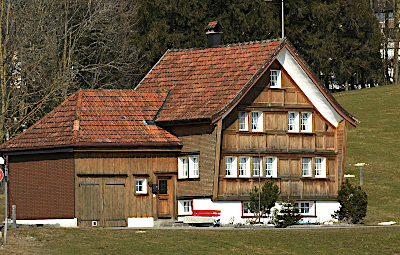
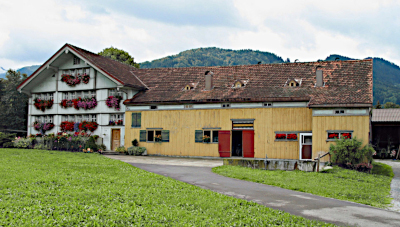
Appenzell
Characteristics
- Farm buildings are grouped together to form a single multi-purpose block.
- Wooden shingles are arranged like fish scales cover the roof and part of the façades.
- Gable of the dwelling faces the valley.
- Windows of the cellar located on the ground level where women working at fine embroidery could find an even temperature.
- Shutters can be folded back vertically made to fit into a groove at the top of the window.
Traditional architecture in
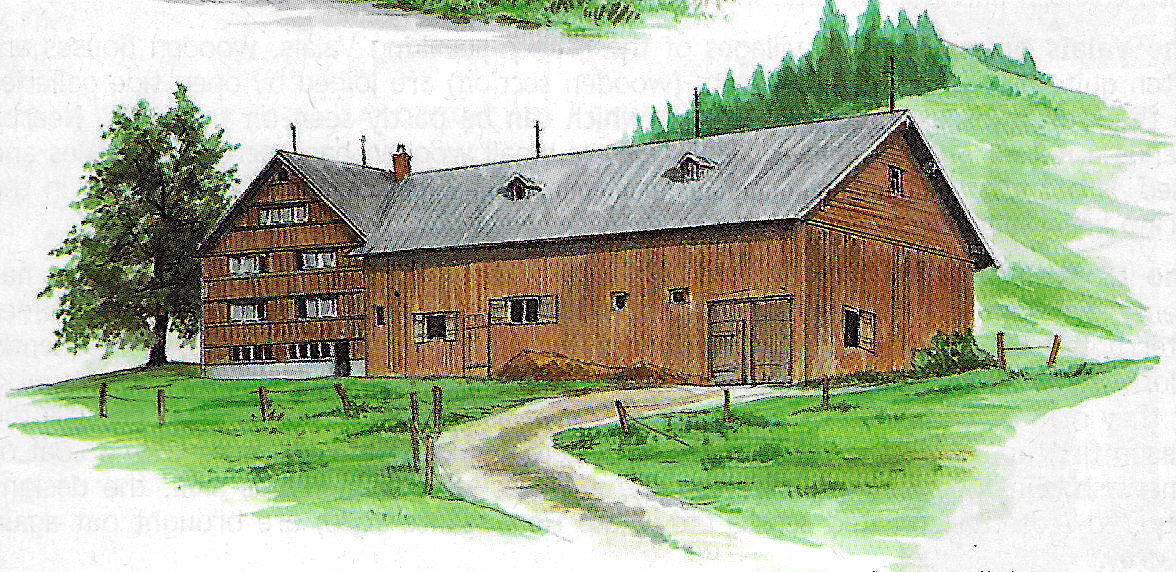
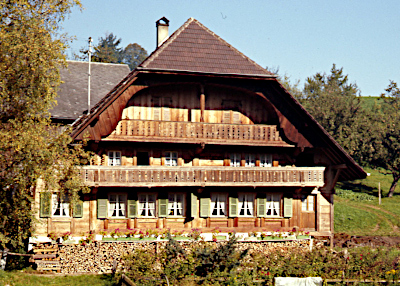
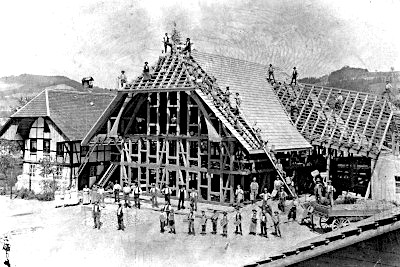
Bern Mittelland
Characteristics
- Huge roof - extending down to the first floor at the sides - also covering the barn.
- Wealthier farmers, imitating townspeople, often chose to remove the triangular roof surmounting the gable and replace it with an imposing timber arch with wood panelling and richly painted decorations.
- Style of building still in use today.


Traditional architecture of
Ticino
Characteristics
- Influenced by northern Italian building styles.
- Stone buildings of simple design, often just 1 room per floor.
- Several buildings are grouped together to allow max use of arable land for agriculture.
- Communication with different parts of the building by means of outdoor stairs and wooden galleries.
- Very thick walls (up to 90cm/3ft) due to uneven shape and size of stones. The quarried stones are carefully hewn and make stable structures, even without limestone mortar.
- Gneiss tiles make a long-lasting roof, but the weight of the roof must be distributed into the walls by means of an ingenious framework because winters can bring several metres of snow.


Vallemaggia, 1890s
Traditional architecture in
Valais
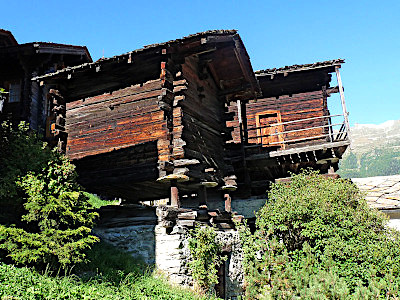
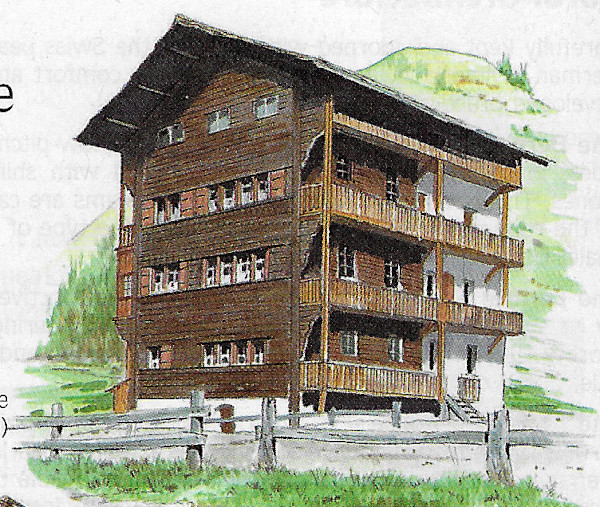
Characteristics
- The entire region was French-speaking until 13th C when German-speaking people settled in the upper valleys leading to differing building styles..
- In French-speaking part, fairly tall stone + wood construction is common, with living quarters (wooden section) joined by open-sided galleries to the kitchen area (masonry section).
- In German-speaking area, wooden beam building styles dominate.
- Nearby is the raccard or mazot - a small wooden barn perched on piles topped by stone discs; used as a granary or storehouse as the stone discs keep the rats and mice out.
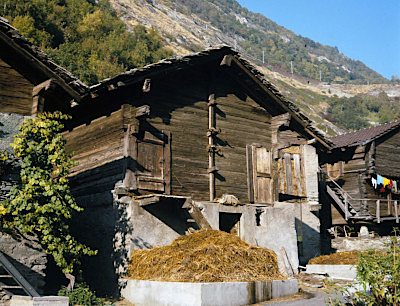
More rustic constructions

Traditional architecture in
Graubünden
The whole area suffered extensive destruction during the Thirty Years War that raged in Europe in the early 17th C; many houses had to be rebuilt.
Characteristics
- New houses were built of stone, sometimes on top of or surrounding an earlier wooden building.
- The typical Engadine house is large offering room for 2 families under a broad gable crowning a façade.
- The heart of the building is the 'sulèr' - a covered courtyard common to barn and living quarters, which serves as a meeting room.
- Windows are small and irregularly placed. The window surrounds widen outwards to allow as much sunlight to enter the room as possible.
- Interiors are furnished and decorated according to regional tradition.
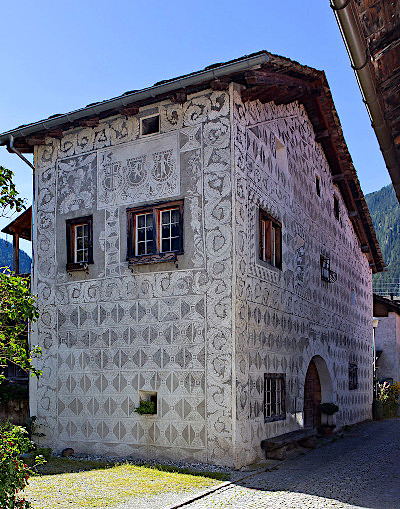
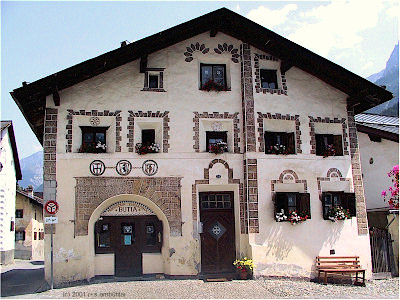

In the Engadine Valley (St Moritz area), the most characteristic feature of the traditional buildings is the use of the s'graffito technique as outside decoration.
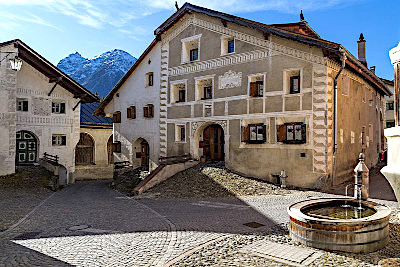
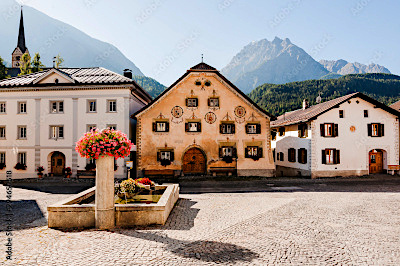
House with s'graffito decoration in Scuol - today and in 1910

S'graffito
(plural: sgraffiti = origin of the word "graffiti") is a technique of wall decor, produced by applying layers of plaster tinted in contrasting colours to a moistened surface and then scratching so as to reveal parts of the underlying layer.

It is an artisanal craft that contributes greatly to the unmistakable charm of the villages of the Engadine valley. Since the height of sgraffito's popularity between the 17th and mid 18th centuries, many of these decorative paintings have disappeared, worn away by the weather or destroyed when houses are demolished or renovated.

Some famous Swiss Architects

Francesco Borromini
the adopted name of Francesco Castelli (1599 - 1667) - from Ticino; a contemporary of Gian Lorenzo Bernini and Pietro da Cortona, - a leading figure in the emergence of Italian Baroque architecture.
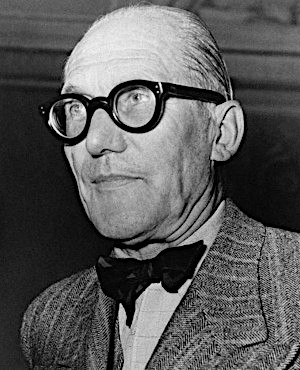
Charles Edouard Jeanneret (1887-1965)
better known as Le Corbusier. He was born in La Chaux-de-Fonds but spent most of his professional life in France.
His most famous work is Chapel de Ronchamps, and the government buildings in Chandighar, India

Herzog and de Meuron (partnership founded Basel 1978)
Basel-based architects; responsible for the Tate Modern in London, the Beijing Olympics main stadium/arena; the Elb Concert Hall in Hamburg and many more prestige museums, buildings and arenas.

Bernard Tschumi (born Lausanne, 1944-)
Designed the Parc la Vilette in Paris, the Blue Tower in Manhattan and the new museum at the foot of the Acropolis in Athens, among many other buildings.

Peter Zumthor (born Basel, 2943-)
2009 Pritzker Prize winner; most well known for the Thermal Baths in Vals.

Mario Botta (born Mendrisio, Ticino, 1943-)
Basel-based architects; responsible for the Tate Modern in London, the Beijing Olympics main stadium/arena; the Elb Concert Hall in Hamburg and many more prestige museums, buildings and arenas.