

Key facts about the Swiss mountains
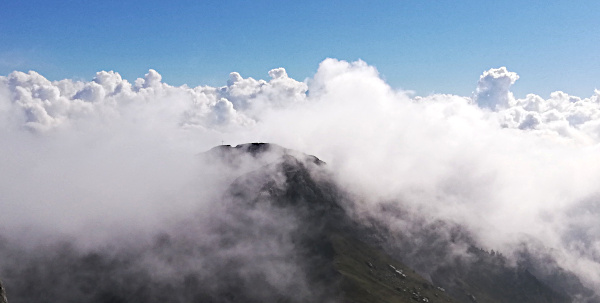
One third of the country's surface area is covered by mountains
The mountains are of major historical, geopolitical and economic importance to the country; they have been the main selling point of the Swiss tourist industry for more than 100 years.
There are 48 peaks standing over 4,000 metres high (13,120 feet)
Swiss mountains can lay claim the following records:
- Highest railway station in Europe - Jungfraujoch 3,454m/11,330ft
- Highest permanently inhabited village in Europe (Juf, canton of Graubünden, 2,126m/7,000ft).
- Highest brewery in Europe (Monstein, canton of Graubünden, 1,600m/5,250ft).
- Highest whisky distillery in Europe - Corvatsch 3033 m
- Highest tram in Europe (Zermatt, canton of Valais, 2,222m/7,290ft).
- Highest exterior elevator in Europe - Hammetschwand lift 153m/502ft
- Steepest cog railway in the world - Pilatus, gradient of 48%.
- Steepest funicular railway in the world - Gelmer; Grimsel Pass gradient of 106% in places.
- Steepest road used by coaches in Europe - Kander to Kien Valley, gradient of 28%.
- Longest glacier in Europe (the Aletsch, approx. 23km/14 miles).
Swiss Alps
- cover 3/5th of country
- belong to the oldest part of the whole Alps chain - the Western Group - the steepest and most contorted and most affected by erosion.
- Highest point is the Monte Rosa massif (near Zermatt)
- St Gotthard massif is the "water tower" of Europe - 4 major rivers have their source in the region.
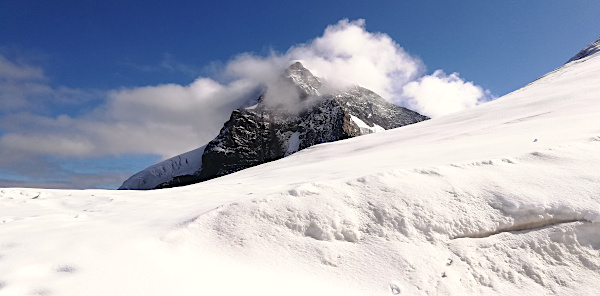
Formation & Geology of the Alps:
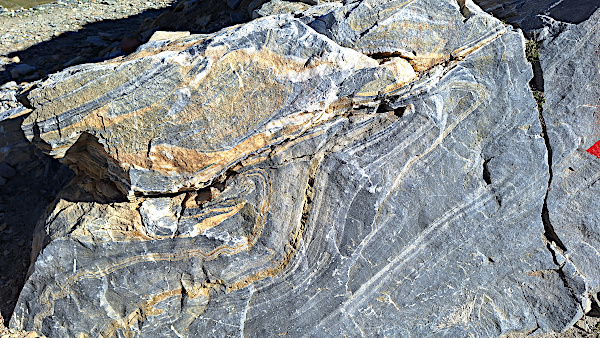
- Alps were first mountains scientifically studied by geologists therefore most geological terminology originates from terms used in the Alps.
- Alps and Jura formed by collision between 2 tectonic plates that began a 100 million yrs ago when the African plate thrust up against the Eurasian plate
- In this process the ancient Tethys Ocean, approx. where Mediterranean Sea lies, became squashed and compressed between the land masses. Shoving all this material together made the rocks and sediments fold over, shatter or pile up on top of each other.
- Over millenia, this jumble grew and built itself into today's Alps - still happening at a rate of 1 mm per year but erosion at the same rate cancels it out.
- Current shape of mountains and valleys is result of at least 5 Ice Ages over the last 2 million years.
- Glaciers flowed down the mountain valley and scooped out lakes and carried rocks (findlings) far from where they originated.
Glaciers, Permafrost, Snow:

There are over 1000 glaciers in the Swiss Alps; most are small but 20 are large ones.
The glaciers are shrinking fast - they have lost 1/3 of their volume in past 50 years - most will disappear by 2050
Europe's largest glacier is the Aletsch Glacier (best seen from Jungfraujoch); it is 23 km/14 mi long or 80 sq km/31 sq mi
Permafrost is melting making the mountainsides less stable; many are liable to collapse or set off massive rockfalls or landslides.
Aug 2017 - there were 2 massive landslides in Val Bondesca
June 2023 - the village of Brienz/Brinzauls was evacuated due to an imminent landslide

Global warming is heavily affecting snowfall - in many places there is no longer enough snow of suitable depth or continuity of snowfall. This has forced the winter resort/skiing industry to reinvent itself as "wellness" centers and invest in attractions that don't rely on snow.
Conquest of the mountains - Alpinism
Until 16th century people had a superstitious dread of the mountains - they could influence weather, thunder, lightening - the people had little scientific knowledge to be able to explain such occurrences.
From 17th C onwards, naturalists searching for new plants for medicinal use began climbing higher and higher and dispelling long-held myths about the mountains.
- Mt Pilatus was climbed in the 1500s
- Mt Titlis - climbed by 4 peasants from Engelberg in 1744
- The Jungfrau - climbed by the Meyer Brothers from Aarau in 1811
19th century = Golden Age of Mountaineering
From 1840 onwards, the Brits recorded most of the famous first ascent of Alpine Peaks:
- Steckhorn 1842
- Wasenhorn 1844
- Pic Dufour 1855 by 3 Smyth brothers
- Eiger 1858 Charles Barrington
- and finally the biggest prize: Matterhorn in 1865 by Edward Whymper