
Most towns and villages in Switzerland have some form of traditional festivities to "drive out the evil spirits" during the darkest days of Winter. These traditions are probably carry-overs from the old pagan days that were incorporated by the early Christians and turned into Saints' days.
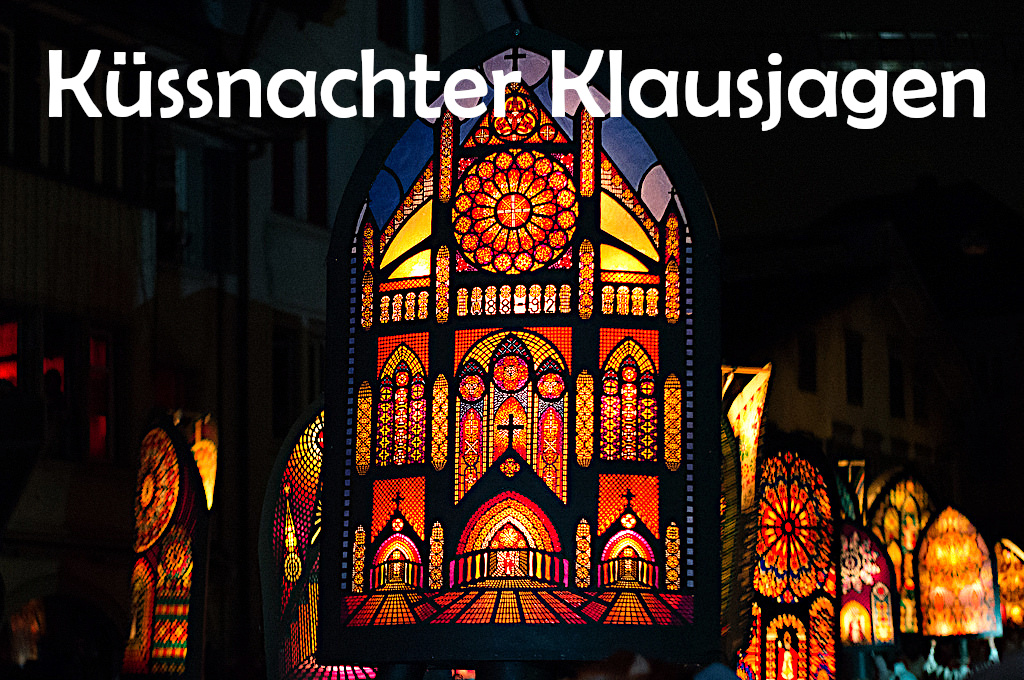
The 6th December is St Nicholas Day and in the town of Küssnacht-am-Rigi on the shores of Lake Lucerne, once a year on the evening before St. Nicholas Day, the town hosts a spectacular procession known as the “Klausjagen” (“Santa Chasing”).
In 1756 the local authorities banned the celebration because it had beome unruly and noisy. However the tradition re-emerged in the late 1800s with a more Christian focus and an organized parade.
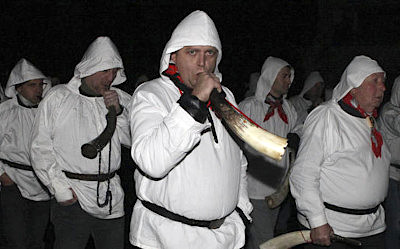
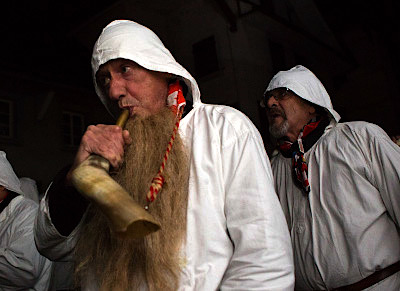
Today only people who have a connection to the town of Küssnacht may take part in the procession. White hooded smocks are worn as the hour-long procession is in darkness lit only by moonlight and candle-light.

The procession begins promptly at 8:15pm when all the lights in the town are turned off plunging the awaiting crowd into complete darkness. The procession then proceeds in 6 stages.
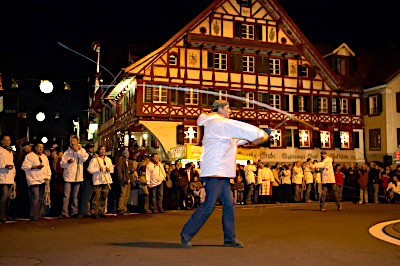
First come the loud "Geiselchlöpfe", the whipcrackers producing explosive sounds louder than large firecrackers. The usually young men show off their skills by cracking their whips from side to side or above their heads using only one arm.

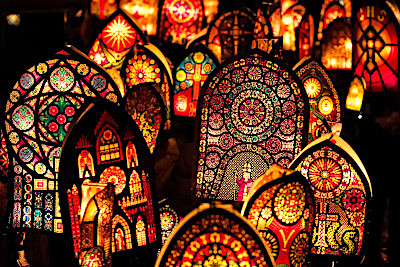
Next come the "Iffelen", hundreds of large illuminated constructions in the shape of a bishop's mitre that are carried on the head. Some are over 7 ft tall, with intricate patterns and illuminated from within solely by the light of candles.

There is no accompanying sound and the Iffeli-wearers, dressed in long white robes, dance around to their own rhythm, showing off their incredible religious-themed constructions which make them look like walking stained glass windows. The sight of them is just as awe-inspiring today as it must have been in the distant past.


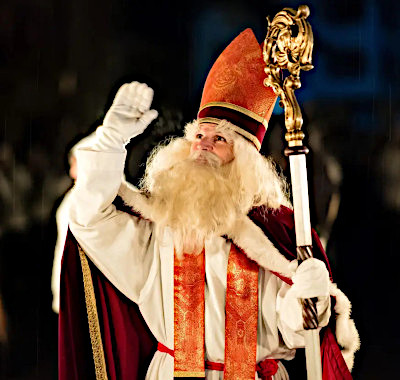
After the last of the Iffeli have passed by, along comes St Nicholas accompanied by 9 torch bearers and 4 attendants known as "Schmutzlis" painted black to represent the "shadow personality" (not racist black-face!).
St Nicholas wears bishop's robes and a bishop's mitre, and carries a bishop's crozier.
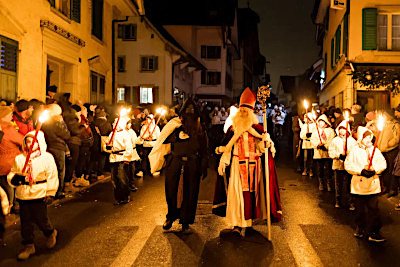
St Nicholas is followed by an 85-member brass band playing the Santa song (about six notes long, repeated over and over)

In the background can now be heard the ringing of the almost deafening "Trychler" bells (loud ceremonial bells) and soon wave after wave of a thousand-plus Trychler bell-ringers file past all banging their cowbell on their thighs in unision. The pavement seems to shake as the bellringers pass by.
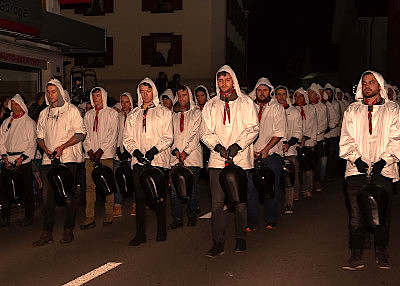
More than a thousand bell ringers!
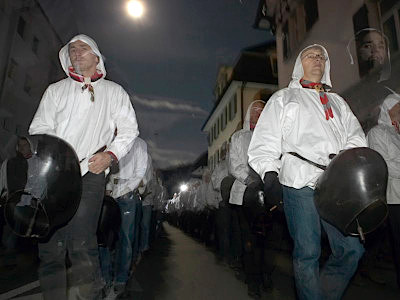

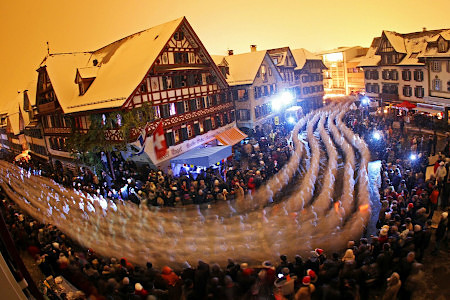
Finally at the end of the procession come the Hunting Horns all making the same haunting paap-paap-paap, pa-pa-pa-pa-paap-paap-paap sound.
By now, all evil spirits have certainly been chased away and people can spend the rest of the night having a party!