
Why Bisses?
The canton of Valais is the driest part of the country due to its geographical layout. Despite being surrounded by some of Switzerland's wettest mountains, the sun-scorched, south-facing region receives just 500 mm of rainfall a year, with dry periods often exacerbated by the Föhn, a warm, dry wind.

From the 13th century an ingenious method of diverting glacial meltwater from mountain streams to parched pastures and vineyards at lower elevations was developed. These water channels are known as "Bisses" or "Suonen" depending on which dialect is used.
Community constructions
To build these structures - many of which cling to the rock faces as they wind their way down to the valley - the communities involved set up associations known as consortiums, some of which still exist today. Consortium members, referred to as Consorts, made up the workforce for constructing the bisses: the time each person had to spend was calculated according to the amount of farmland they used.

Other bisses were built by wealthy landowners, who ensured the bisses were managed collectively for the common good of their commune with rules for providing the workforce similar to those applied by the consortiums.

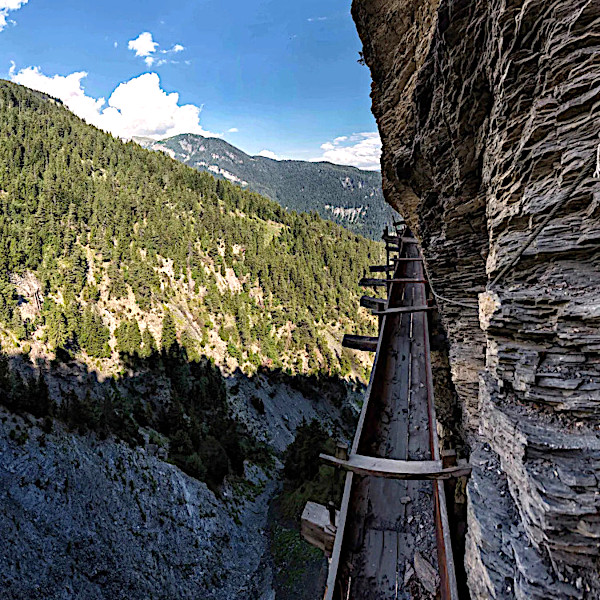
Constructing a bisse was an extensive and often dangerous undertaking. Using nothing more than muscle power and human ingenuity, pick and shovel, and timber and ropes, irrigation channels were created along the rock faces, many suspended several hundred metres above.
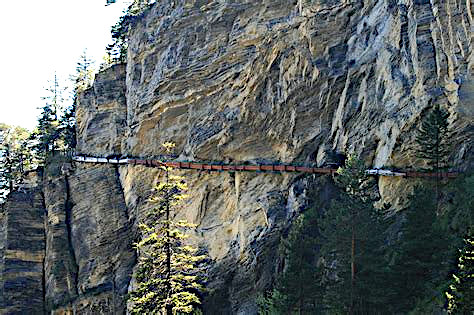
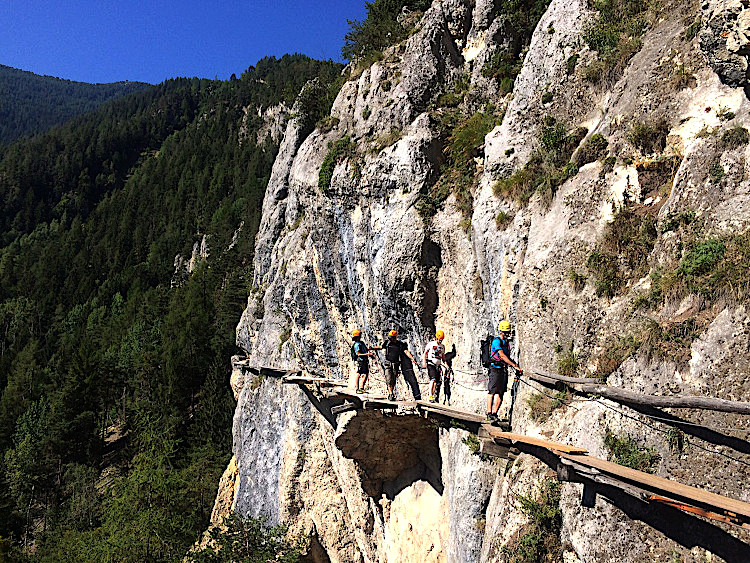
Measuring between ½ m to 2m in breadth, the most primitive of Valais bisses were hewn out of rock; others were hollowed from tree trunks; many were provided with avalanche and rock fall protection.
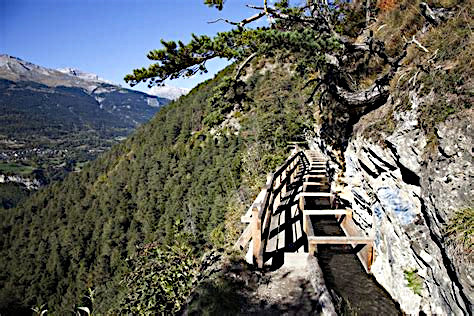
The true marvels of bisse engineering were the "hanging channels", designed to guide water from far-off glaciers around gorges and overhangs in the region's wildest corners.
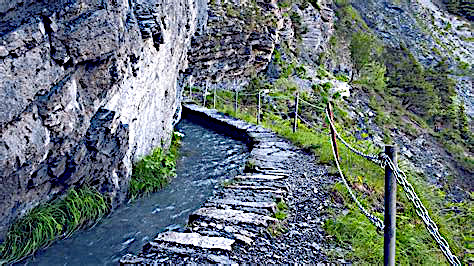
Most of the bisses are between 5 and 10 kms long. The longest, the Bisse of Saxon, is 28 km long, taking water from the Printse watercourse high above Nendaz and transporting it all the way down to Saxon. The Levron at 18 kms is the second longest bisse coursing between 2'400 and 1'900 metres in altitude in the mountain pastures of Verbier.
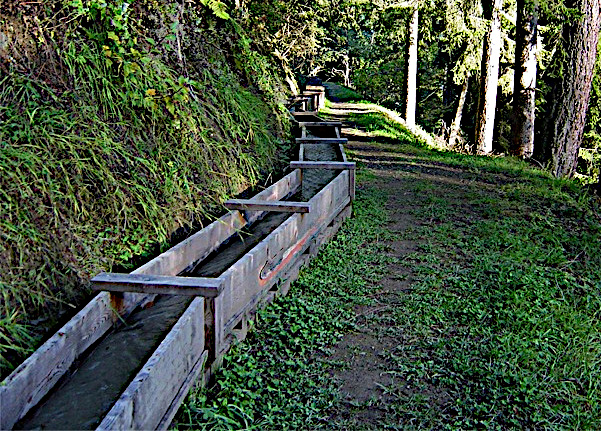
Region-wide distribution
There are bisses at every altitude and in every region of the Valais. Until the beginning of the 20th century there were more than 200 in use – around 1'800km of irrigation channels.
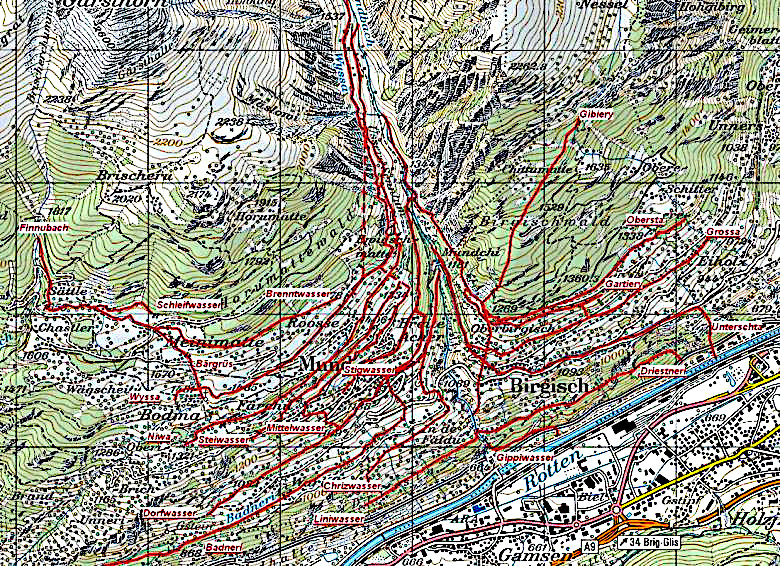
Red lines show the bisses (water channels)
They were maintained regularly and their usage was strictly regulated. Each bisse was supervised by a guard whose job was to maintain and clean the bisse and ensure that the beneficiary rights were properly distributed.

Tourism revitalises the bisses
Many of the bisses have disappeared, victims of the modernisation and economic transformation of our society today. Those that remain are generating renewed interest among the local population because of their touristic value, which is why they are being repaired and preserved by non-profit associations.
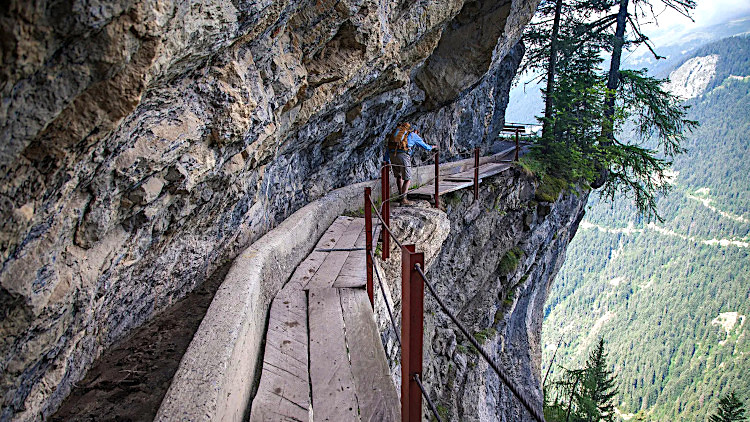
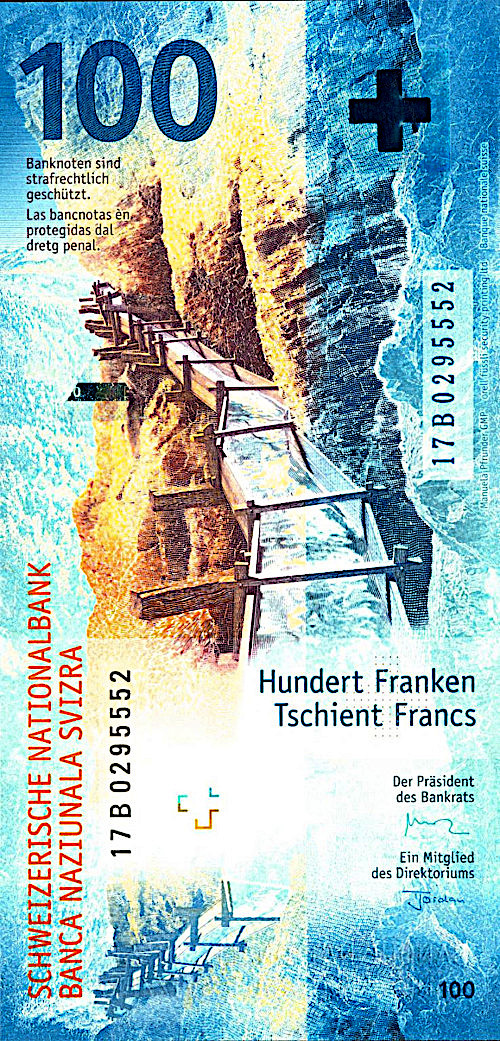
Known as the "King of Bisses", built in 1442 and clinging to a 1,800 m rocky ridge, the Bisse d'Ayent is honoured on the nation's 100-franc note