

Even before WW2, Switzerland's main military goal was to preserve its neutrality, independence and stay out of any fighting.
The threat of invasion during WW2 was always present, so Switzerland increased the training of recruits and built defence works. Reserves were called up to guard the border with Germany.
The citizens were told to stockpile food, and given instructions on how to prepare for air raids. Every available piece of land was dug up, and moor areas drained, for planting crops to increase possible food supplies.
In 1940 German military staff started drawing up invasion plans for Switzerland known as Operation Tannenbaum.
The Nazis aimed to destroy the Swiss army and invade the central part of Switzerland, important for strategic and economic reasons, while Mussolini was to invade from the south, thus dividing the country in two.
The plans were never carried out; Hitler invaded Russia instead thinking he would take over Switzerland afterwards ...
Switzerland's Réduit defence system
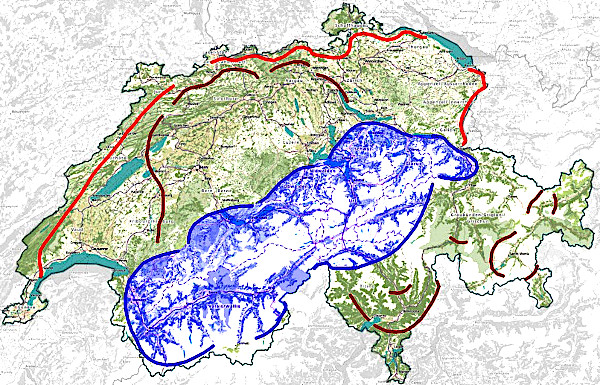
The Swiss Reduit (National Redoubt) Strategy
The key defence strategy of the Swiss during WW2 was to persuade any invader that invasion would be far more costly than the benefits.
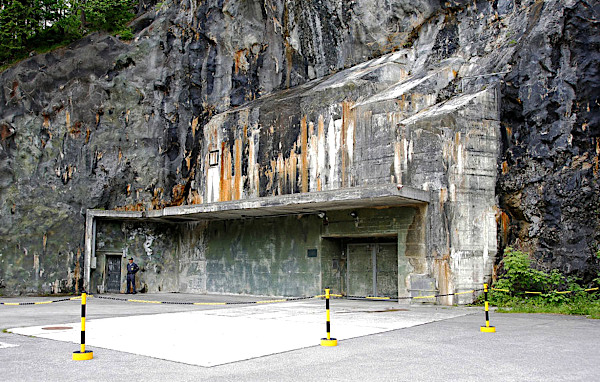
To do this, the Swiss expanded or built bunkers inside the mountains and especially in areas guarding the key mountain passes so denying Switzerland's crucial Alpine transportation infrastructure to any aggressor.
Additional defences were constructed around the borders of the country with the aim of delaying invading forces while the Fortress Army would disappear into well-stocked bunkers from where they could wage protracted guerrilla warefare.
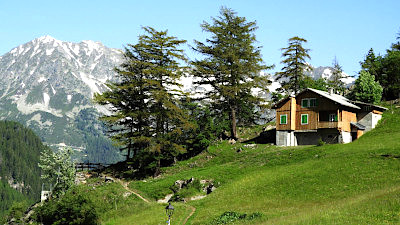
Anti-tank blockades were set up in the valleys; innocuous-looking buildings camouflaged heavily armed facilities inside.
Intentional misinformation about the capacity of the bunkers was widely disseminated knowing it would reach the German High Command in the hopes that it would persuade the Nazi generals to use their forces elsewhere.
Around 8'000 highly secret military bunkers and defences were in use until the late 1990's when many were decommissioned.

General Henri Guisan was the chief of the Swiss Military Forces during WW2. He wrote in his report after the war:
“I am convinced that our fortifications had a major impact on German plans from 1943 onwards, and it is likely that they made a significant contribution towards the decision to refrain from attacking Switzerland. The expenditure on these facilities therefore certainly paid off.”
The bunkers were not decommissioned after the WW2 ended but remained in use during the Cold War.
Camouflaged bunker entrances


Bunker for military-jet fighters

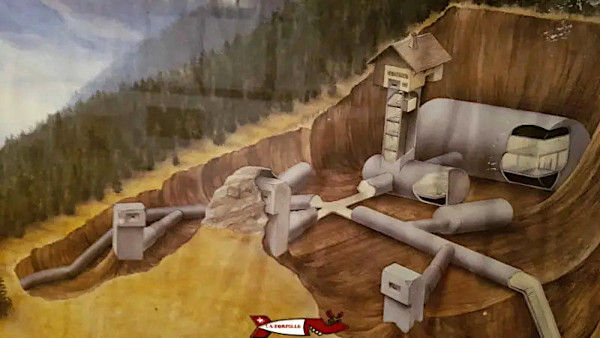
Cross-section of typical bunker

Innocent-looking farm buildings housed heavy artillery


Infantry defences at Sufers
(machine guns to the right; anti-tank cannons to the left with tunnel between)
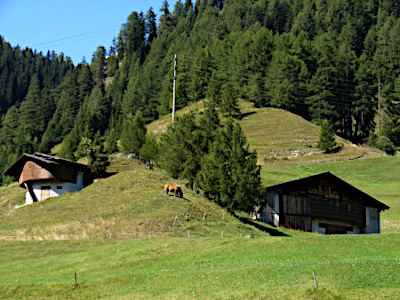

Fuchsegg on the Furka Pass
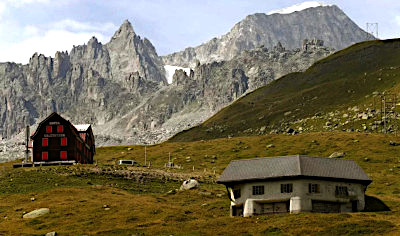
Farmhouse on Col de Forclaz is a camouflaged bunker entrance
Underground cannon - closed

and open

Camouflaged cannon


Mortar placements masquerading as drain covers


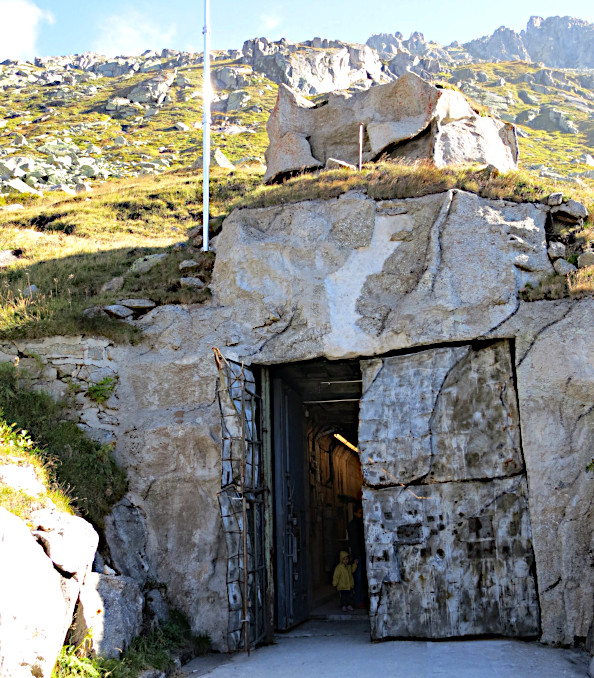
Sasso San Gottardo:
The Mother of all Mountain Bunkers
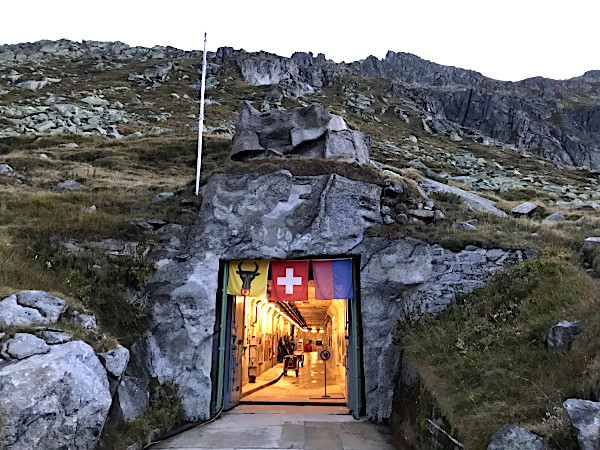
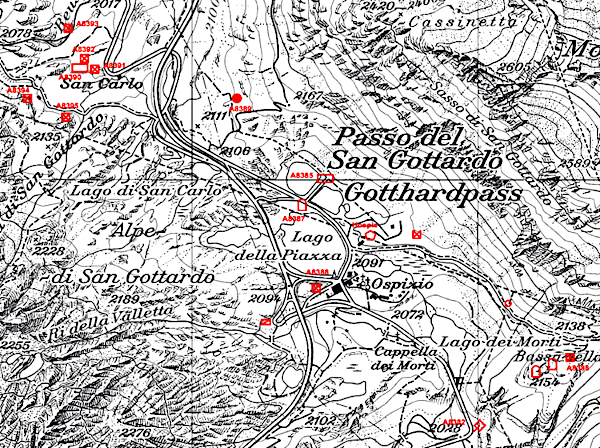

The modest entrance to a vast bunker system with 3 kms of tunnels

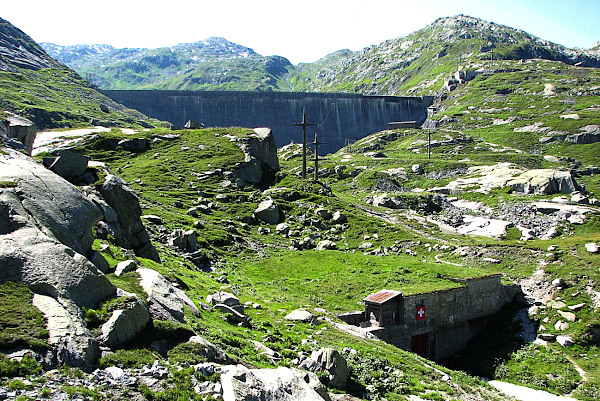
Camouflaged cannon at Gotthard

Historic defences at St Maurice:
Fort Dailly - Fort Scex - Fort de Cindey
1476 earliest defences built
1831 expanded
1892 more expansions
1911 expanded further
1940 bunkers added
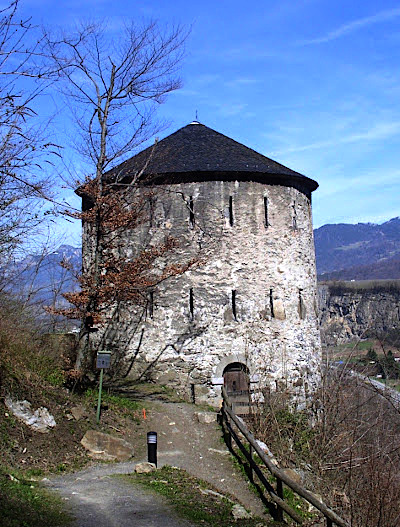
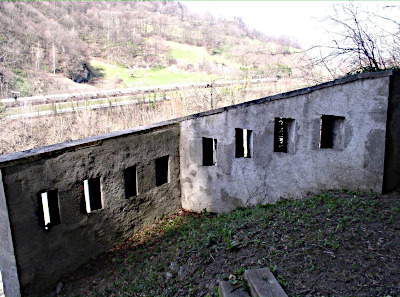
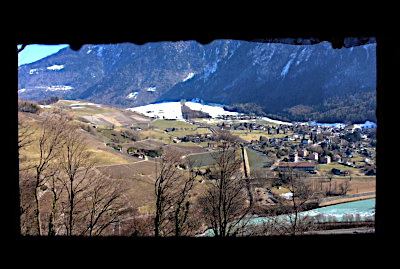
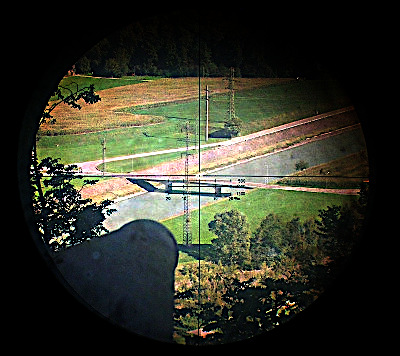
St Maurice Fort Dailly entrance
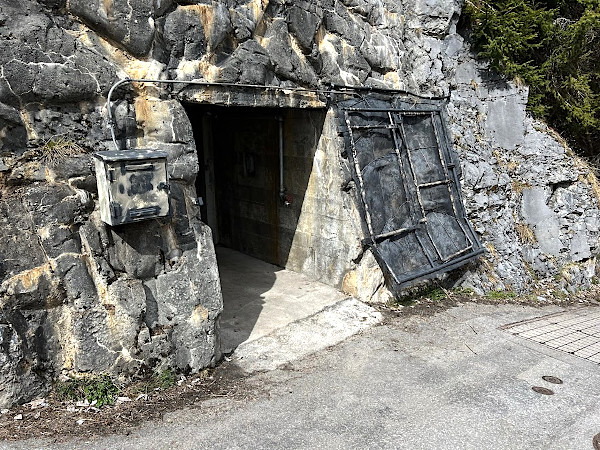
La Champex

Along the 'Toblerone' Line (anti-tank defences) from Jura to Lake Geneva

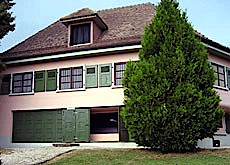
Villa Rose and Villa Verte
Two of more than 100 "false chalets" built in 1940;
Walls are 2,5m (7ft) thick



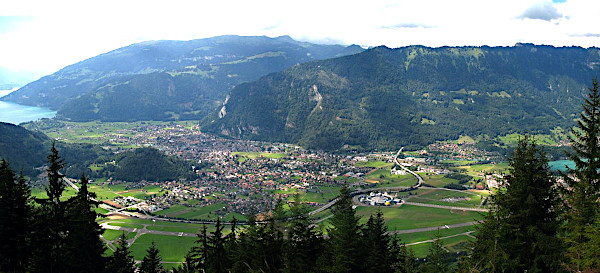
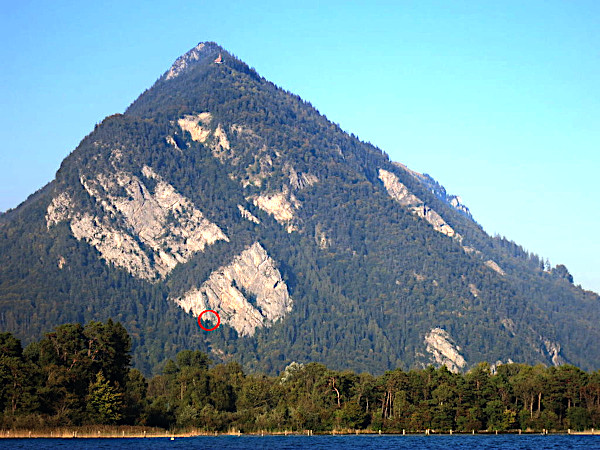
Military High Command Headquarters at Interlaken



New uses for old bunkers
La Claustra Hotel at the Gotthard

Restaurant inside La Claustra bunker hotel

Museum inside bunker at Faulensee

Former ammo storage now holds cheese

Mushrooms cultivated in Erstfeld bunker

The main use of decommissioned bunkers today:
Ultra high-security storage centres for data servers
and valuable wordly goods