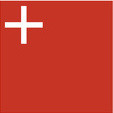
SCHWYZ (SZ)
Area in km² = 908
Canton population = 135'000
Language = German
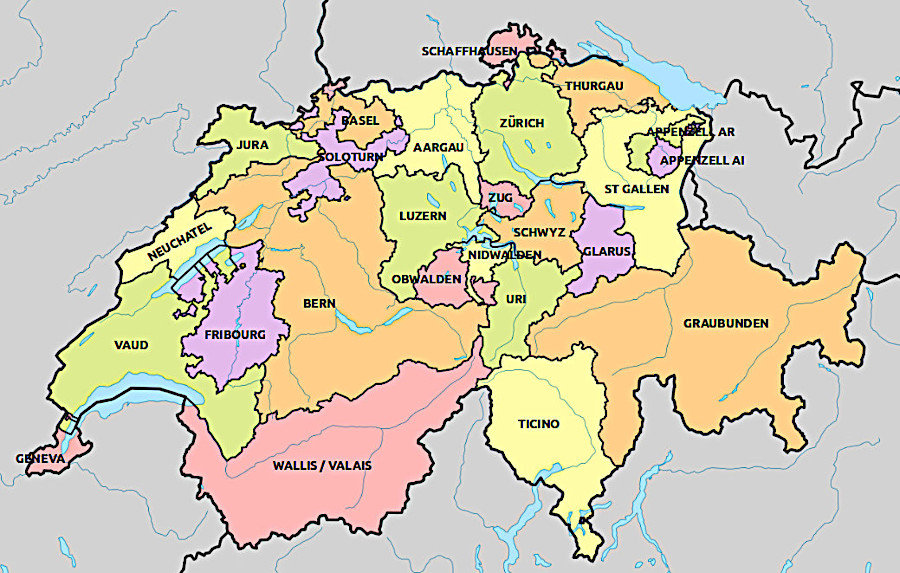
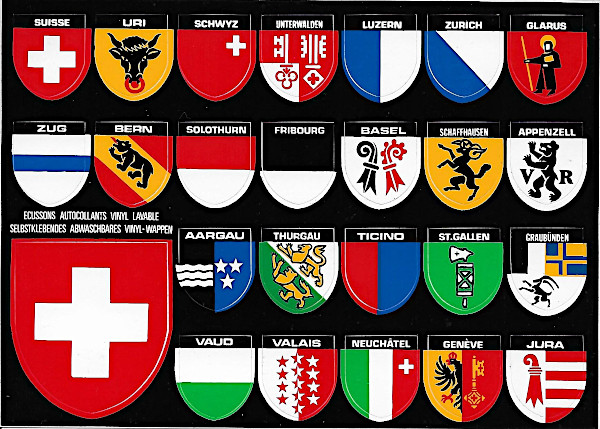
The country we know as Switzerland is a confederation of 23 cantons (states) and 3 cantons that are split into 2 half-cantons each, so making a total of 26.
Each canton is semi-autonomous and has its own constitution, government, legislature and judiciary.
Switzerland does not have an official capital city; each of the cantons have their own capital town/city. But because the Federal Government offices are located in Bern, it is considered the "de facto" capital of Switzerland to the rest of the world.
Bern was chosen because the city provided free land for construction of the federal buildings, but more importantly to ensure the separation of political power from the economic power centres of Zürich and Geneva.
The Confederation of Swiss cantons grew 'organically' starting in 1291 with 3 central Swiss cantons eventually to the borders as we know today - not through conquest or annexation but through the desire of the citizens not to be ruled by any autocratic ruler but to determine their own lives freely.
After the First World War, the Vorarlberg province of Austria, on the eastern Swiss border, wanted to join the Swiss Confederation; this request was declined by the Swiss as it would have upset the careful language balance by making German too dominant.
More recently, serious dissatisfaction with the central governments of France and Italy prompted areas of those countries neighbouring on to Switzerland to make a request to join the Swiss Confederation.
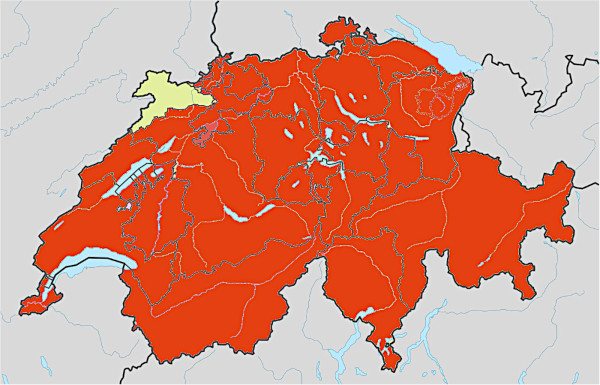
The following maps show how the country grew 'organically' starting in Central Switzerland and spreading outwards as the people rose up against autocratic overlords.
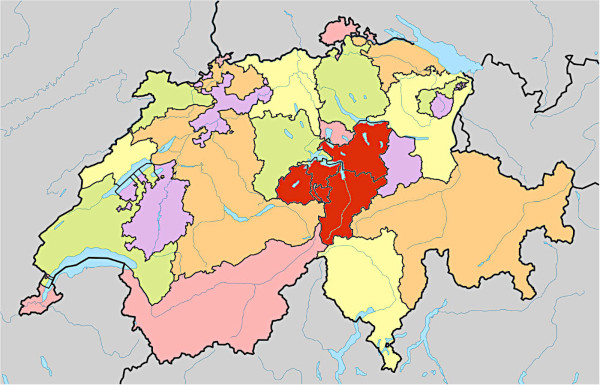
SCHWYZ (SZ)
Area in km² = 908
Canton population = 135'000
Language = German

URI (UR)
Area in km² = 1'077
Canton population = 38'000
Language = German
The Canton of UNTERWALDEN comprises the 2 half-cantons of Obwalden and Nidwalden

OBWALDEN (OW)
Area in km² = 491
Canton population = 39'000
Language = German

NIDWALDEN (NW)
Area in km² = 276
Canton population = 45'000
Language = German
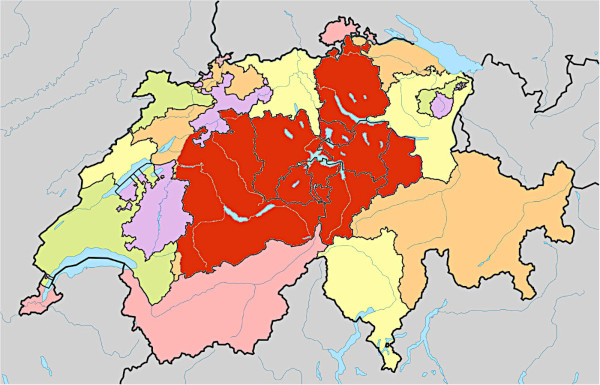

LUZERN (LU) (joined 1332)
Area in km² = 1'494
Canton population = 432'744
Language = German

ZÜRICH (ZH) (joined 1351)
Area in km² = 1'077
Canton population = 1'250'000
Language = German

ZUG (ZG) (joined 1352)
Area in km² = 239
Canton population = 105'000
Language = German

GLARUS (GL) (joined 1352)
Area in km² = 685
Canton population = 40'000
Language = German

BERN (BE) (joined 1353)
Area in km² = 5'959
Canton population = 980'000
Language = German
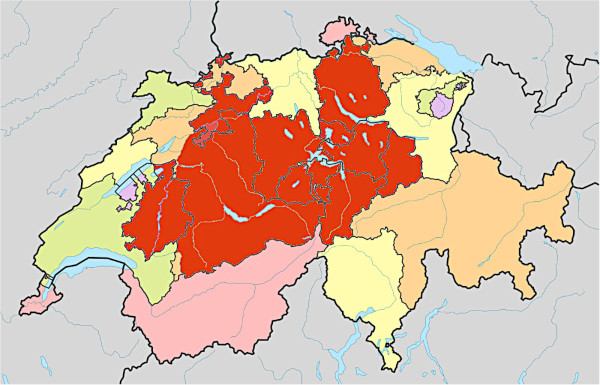
FRIBOURG (FR)
Area in km² = 1'671
Canton population = 243'000
Language = French and German (Bilingual canton)

SOLOTHURN (SO)
Area in km² = 791
Canton population = 247'000
Language = German

SCHAFFHAUSEN (SH)
Area in km² = 299
Canton population = 74'000
Language = German
BASEL, an associate of the Confederation since 1400, was invited to join the Confederation in 1501 due to its strategic position on the Rhine. In 1833, after lengthy urban-rural disagreements, it split into the 2 half-cantons of Basel-Stadt (city) and Basel-Land (rural).

BASEL-STADT (BS) (associate of the Conferedration since 1400)
Area in km² = 37
Canton population = 186'000
Language = German

BASEL-LAND (BL) (associate of the Conferedration since 1400)
Area in km² = 518
Canton population = 263'000
Language = German
APPENZELL, an associate of the Confederation since 1411, decided to join the Confederation in 1513. In 1597, after conflict between Catholics and Protestants, it split into the 2 half-cantons of Appenzell Ausserrhoden (Protestant) and Appenzell Innerrhoden (Catholic).
APPENZELL AUSSERRHODEN (AR)
Area in km² = 243
Canton population = 56'000
Language = German

APPENZELL INNERRHODEN (AI)
Area in km² = 173
Canton population = 15'000
Language = German
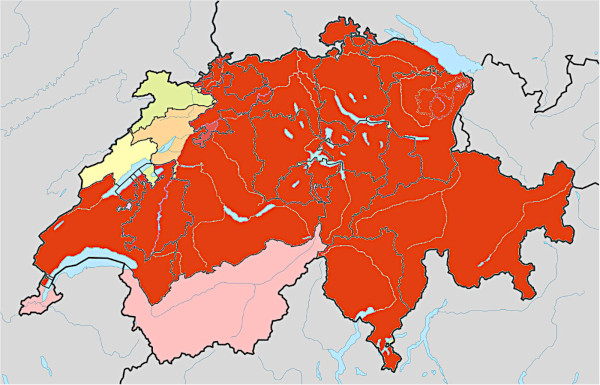

AARGAU (AG) (associate of the Conferedration since 1415)
Area in km² = 1'404
Canton population = 156'000
Language = German
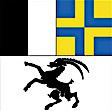
GRAUBÜNDEN (GR) also Grischuns, Grigioni) (associate of the Conferedration since 1498)
Area in km² = 7'105
Canton population = 186'000
Language = German

ST GALLEN (SG) (associate of the Conferedration since 1412)
Area in km² = 2'026
Canton population = 455'000
Language = German
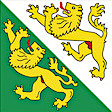
THURGAU (TG) (associate of the Conferedration since 1460)
Area in km² = 991
Canton population = 230'000
Language = German
TICINO (TI) (associate of the Conferedration since 1403)
Area in km² = 2'813
Canton population = 315'000
Language = Italian

VAUD (VD) (associate of the Conferedration since 1536)
Area in km² = 3'212
Canton population = 632'000
Language = French
These cantons became part of the Confederation at the end of the Napoleonic Wars in Europe:

GENEVA (GE)
Area in km² = 282
Canton population = 419'000
Language = French
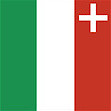
NEUCHATEL (NE)
Area in km² = 803
Canton population = 167'000
Language = French
VALAIS / WALLIS (VS)
Area in km² = 5'225
Canton population = 281'000
Language = French & German (bilingual canton)

The Jura (majority French-speaking) formed part of Canton Bern (majority German-speaking). In 1979, after a successful referendum, Jura amicably split from Canton Bern to become a canton in its own right.
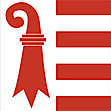
JURA (JU)
Area in km² = 839
Canton population = 69'000
Language = French
how the family grew from the 3 founding cantons
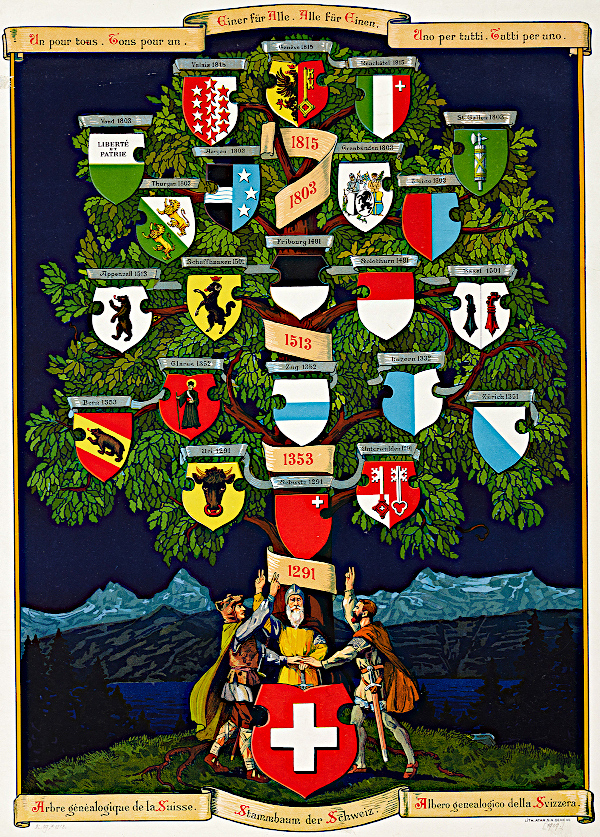
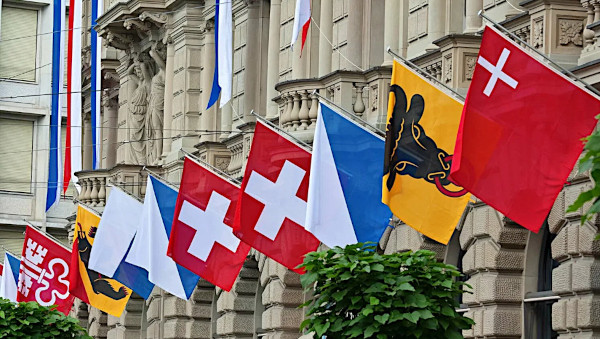
Officially the cantonal flags are displayed not in alphabetical order, but by date of joining the Swiss Confederation - so the flags of the 3 founding cantons always come first with Jura at the end.